

Mexico currently relies on the United States for 75% of its natural gas supply, importing 6.5 billion cubic feet per day (bcfd) out of a total demand of 9 bcfd. With the U.S. shale revolution providing a clear roadmap, the Mexican government has appointed a special commission to evaluate domestic production potential. However, the path toward energy independence remains fraught with geological, political, and environmental hurdles.
Ambitious Energy Goals vs. Production Reality
State-owned oil giant Pemex has set a target to boost domestic gas production to 4 bcfd by 2030. While this marks significant progress, experts note it is insufficient to eliminate the country’s heavy reliance on American imports. This production effort is part of a broader, $42 billion initiative to expand Mexico’s power capacity by 32 gigawatts (GW) by 2030.
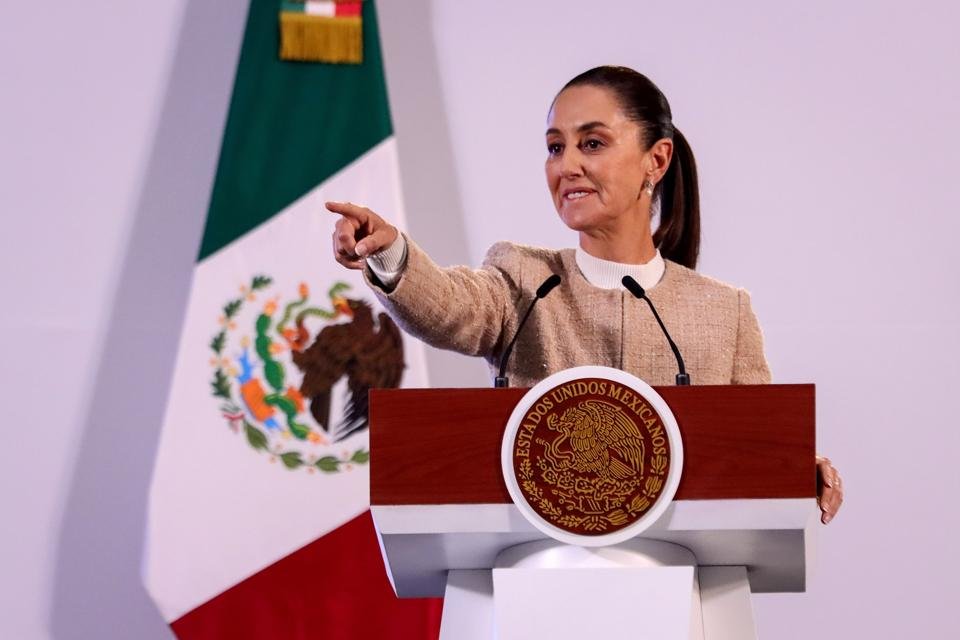
President Claudia Sheinbaum’s vision includes a major shift toward renewables, aiming to increase their share of the power mix from 24% to 38% by the end of the decade. Gas remains a bridge, with 10 GW of the new capacity earmarked for five combined-cycle plants.
The Northern Shale Potential
Mexico holds over 140 trillion cubic feet (Tcf) of unconventional gas resources, primarily located in northern shale and tight sand basins. While impressive, these reserves are dwarfed by the U.S. Delaware Basin—the largest documented oil and gas deposit in the U.S.—which contains 281 Tcf. Proximity to this massive play suggests that the motivation for extraction is immediate and geographically logical.
Table: Unconventional gas plays in Mexico.
Regional Challenges: Security and Regulation
The northern Burgos basin, which shares geological continuity with the prolific Eagle Ford play in Texas, remains hampered by organized crime, complicating investment and insurance. Meanwhile, the massive Sabinas-Burro-Picachos play faces deep-seated regulatory gridlock due to opposition party control in the region.
The Tampico-Misantla Conflict
The southern Tampico-Misantla basin is a high-stakes region containing 20 Tcf of gas and an estimated 35 billion barrels of unconventional crude. Despite its potential, the government commission has officially advised against fracking here. The region is densely populated, home to indigenous tribes opposed to extraction, and sits atop critical freshwater aquifers vital for agriculture and drinking water.
President Sheinbaum has set a strict prerequisite for any future unconventional extraction: the confirmation of deep saline reservoirs to avoid freshwater contamination. Additionally, any project must implement an independent monitoring system for seismic activity and aquifer integrity, further straining Pemex’s already precarious financial position.
The Path Forward: Saltwater and Tech Transfer
Fracking in Mexico will likely be redirected toward northern basins that contain saltwater rather than freshwater. This strategy avoids the environmental risks associated with the southern regions but requires advanced water treatment solutions. If the cost of cleaning produced water can be managed, Mexico is well-positioned to adopt proven U.S. horizontal drilling and fracking designs.
By leveraging expertise from the Delaware Basin across the border and adopting surveillance models similar to those used in Australian coalbed methane plays, Mexico may finally unlock its dormant potential—provided it can navigate its complex political and environmental landscape.