

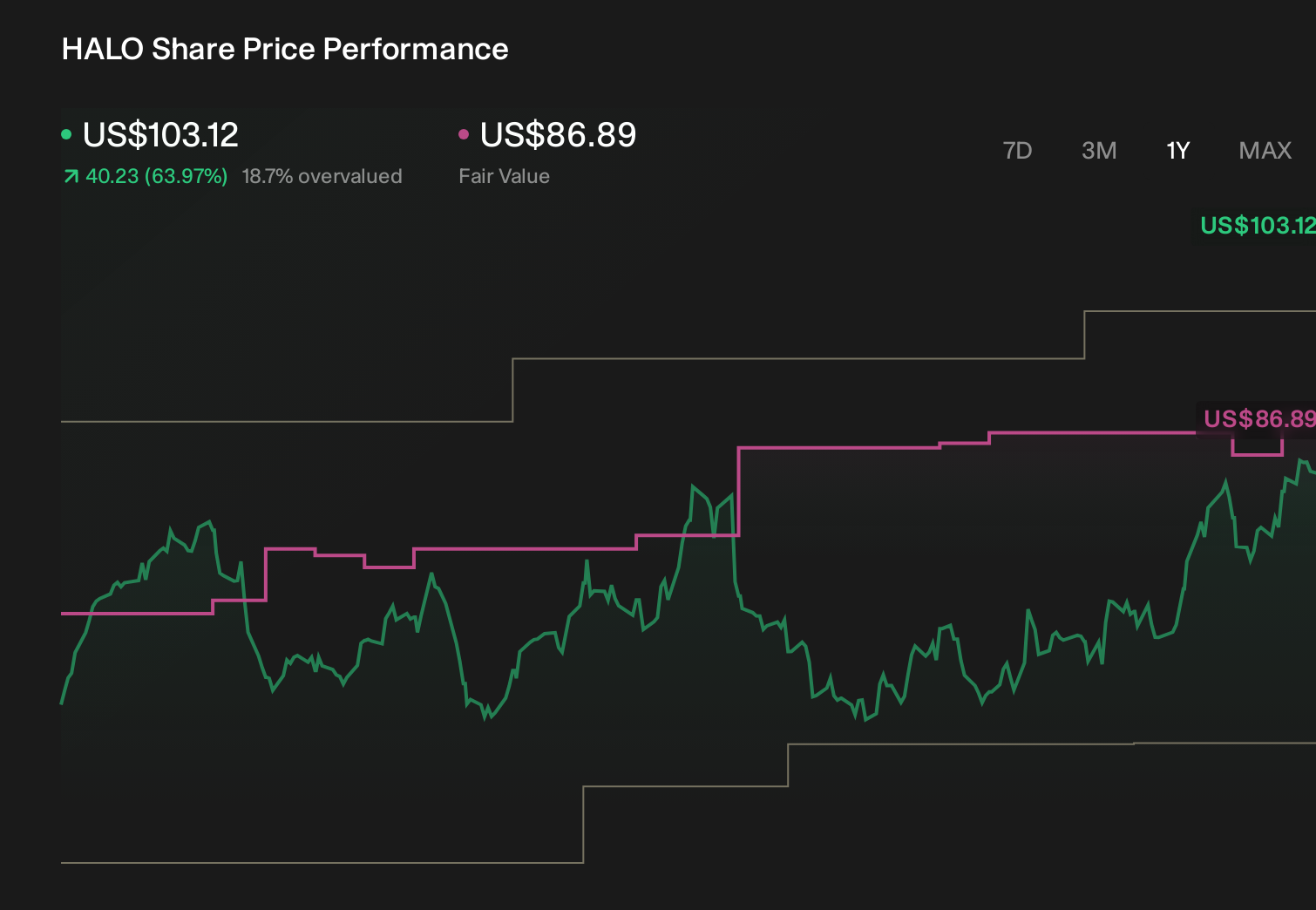
Halozyme Therapeutics (HALO) shares surged 24.9% following the company’s decision to raise its 2026 revenue outlook and accelerate its share buyback program, signaling strong confidence in its ENHANZE platform.
The ENHANZE Revenue Engine
To maintain a long-term position in Halozyme, investors must weigh the potential of the ENHANZE royalty model against inherent risks. The company’s ability to convert partner drug launches into high-margin cash flow remains the primary catalyst for growth. While the updated 2026 revenue guidance highlights the successful adoption of ENHANZE, the company remains heavily reliant on a small number of key products, which continues to pose a risk regarding partner concentration and regulatory hurdles.
Aggressive Capital Allocation
A significant driver of the recent market optimism is Halozyme’s aggressive capital return strategy. The company has successfully completed US$750 million in buybacks under its 2024 program and has already deployed an additional US$175.01 million under a new 2026 authorization. By coupling these substantial repurchases with increased revenue guidance, management is emphasizing the resilience of its royalty streams. However, this strategy also amplifies the stakes: any disruption to legal protections or major partnerships would now have a more pronounced impact on per-share earnings.
Legal Hurdles and Valuation Outlook
Despite the current momentum, the legal and patent challenges surrounding the ENHANZE platform remain a critical watchpoint for investors. The company’s internal projections aim for US$2.1 billion in revenue and US$1.1 billion in earnings by 2029.
While some analysts remain optimistic, modeling up to US$2.3 billion in revenue by 2029, the guidance raise serves as a double-edged sword. It either bolsters the case for ENHANZE’s long-term durability or highlights the vulnerability of these forecasts to unresolved litigation and shifting patent outcomes.