

Ducommun (DCO) captured investor attention following its Q2 2026 earnings report, which showcased increased sales, improved profitability, and a robust backlog driven by missile-related defense contracts.
Market Momentum and Performance
The company’s recent financial results arrive amidst a stellar stock performance, with shares delivering a 43.61% return over the last 90 days and a 120.53% total shareholder return over the past year. This surge reflects growing investor optimism as the market reassesses the company’s long-term growth potential against existing risk factors.
Valuation: Overvalued or Undervalued?
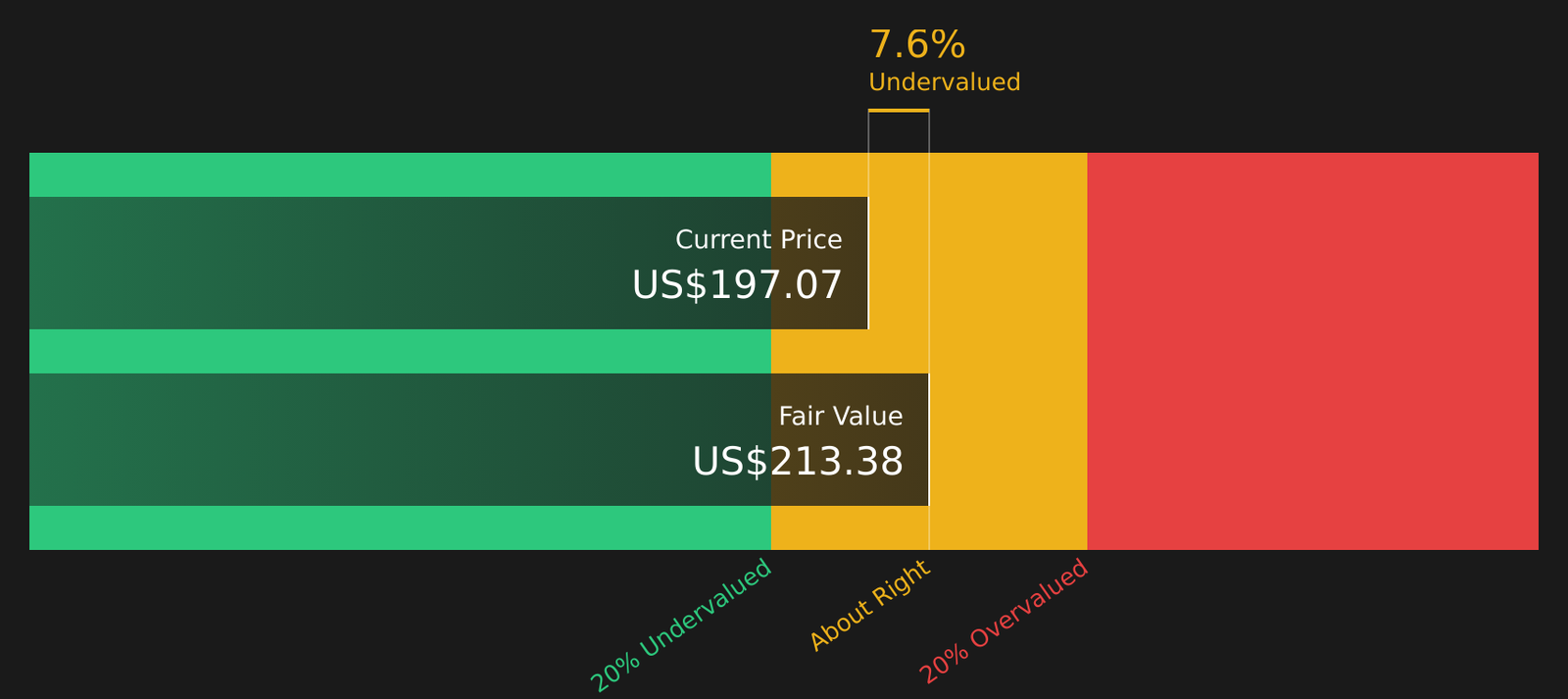
With the stock trading at $197.07, investors are now weighing the merits of entering the position versus waiting for a potential pullback. Current analyst consensus places the fair value of Ducommun at $190.80, suggesting that the recent price rally has already captured a significant portion of the expected upside.
This valuation model incorporates an 8.19% discount rate, steady revenue growth projections, and expanding profit margins. Notably, the model assumes a future earnings multiple that remains conservative compared to the broader US aerospace and defense sector. This leads to a current assessment of the stock as approximately 3.3% overvalued based on standard analyst targets.
Conflicting Financial Models
The narrative surrounding Ducommun’s valuation is not unanimous. While analysts suggest a slight premium, the Simply Wall St Discounted Cash Flow (DCF) model offers a divergent perspective. According to the DCF analysis, the stock’s future cash flow value is estimated at $213.37, positioning DCO as undervalued at its current market price. This discrepancy highlights the importance of scrutinizing the underlying assumptions regarding future cash flows.
Operational Drivers and Risk Factors
The positive sentiment surrounding Ducommun is anchored in a narrative of high-quality earnings, disciplined cost management, and a favorable product mix centered on engineered components. However, the outlook remains sensitive to macroeconomic and industry-specific headwinds.
Key risks that could derail this growth trajectory include prolonged destocking cycles within the commercial aerospace sector and potential shifts in government defense budgets, which could disproportionately impact missile and radar programs. Investors are advised to carefully monitor these variables, as the stock’s valuation remains highly dependent on the stability of these specific revenue streams.