

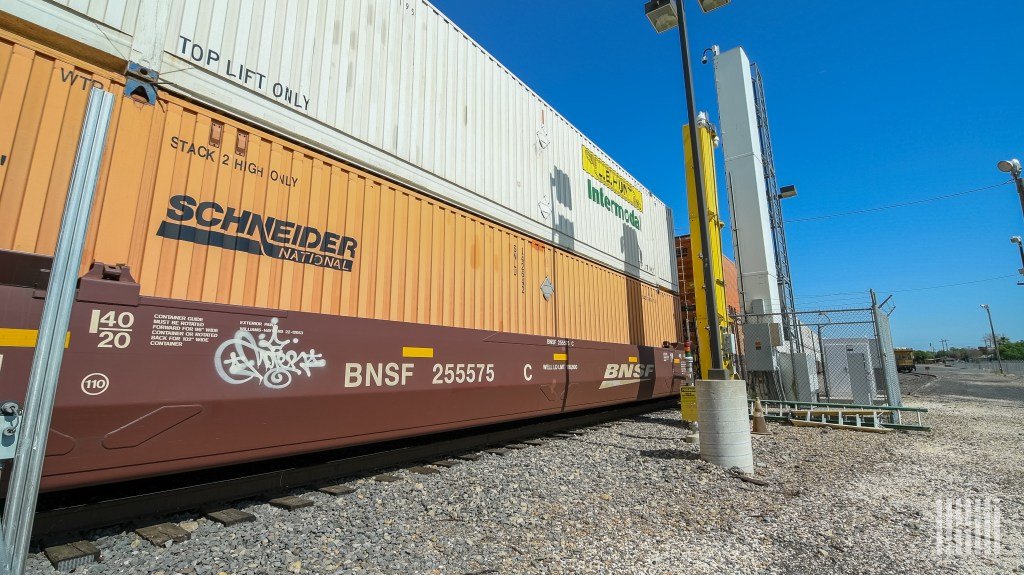
Domestic intermodal rail container usage has surged 10% compared to 2025 levels, while long-haul trucking volumes remain stagnant, signaling a clear shift in how freight is moving across the U.S. as shippers abandon expensive truckload options in favor of rail.
The Growing Divide Between Rail and Road
Since mid-July, intermodal and long-haul trucking volumes have been moving in opposite directions. While total tender volumes are up 6% year-over-year, the long-haul segment—defined as loads traveling over 800 miles—is the only outlier showing no annual growth. In fact, the Long-Haul Tender Volume Index (LSTVI) has hit its lowest point of the year, a highly unusual trend for August, even amidst robust import activity at California ports.
Infrastructure and Regional Growth
Much of the nation’s freight originates as overseas imports clearing through the Los Angeles and Long Beach port complexes. While Los Angeles remains the primary gateway, the logistics flow is shifting. Chicago, the nation’s largest domestic container hub, has experienced a 9% growth rate in volume compared to last year, significantly outpacing Los Angeles’ 3% growth. Meanwhile, Atlanta—fed by containers from both Savannah and LA—has seen volumes climb by over 20%.
The Cost Catalyst
The primary driver behind this modal shift is the rapid escalation of trucking costs. Shippers are finding the price gap between road and rail impossible to ignore:
- Chicago to Elizabeth, NJ: Truckload contract rates have jumped 31% (including fuel), while intermodal rates have risen only 5%.
- Atlanta to Elizabeth, NJ: Trucking rates have surged nearly 60%, compared to a modest 6% increase for intermodal.
Future Outlook and Market Risks
While intermodal carriers have significant room to increase rates without losing market share, they face structural limitations. Rail infrastructure is not infinite, and drayage capacity remains a bottleneck, mirroring the same constraints that plague the trucking industry. Furthermore, as the industry approaches the peak shipping season in September and October, the system will face even greater stress.
Additionally, inventory levels are currently tighter than in recent years. This leaves shippers vulnerable to sudden demand shocks; should such a shift occur, the inherent flexibility of trucking may once again become a necessity. For now, while the cost-saving strategy of shifting to rail is prudent, experts warn that relying too heavily on a single mode of transportation carries significant risks in an increasingly dynamic and unpredictable supply chain environment.