

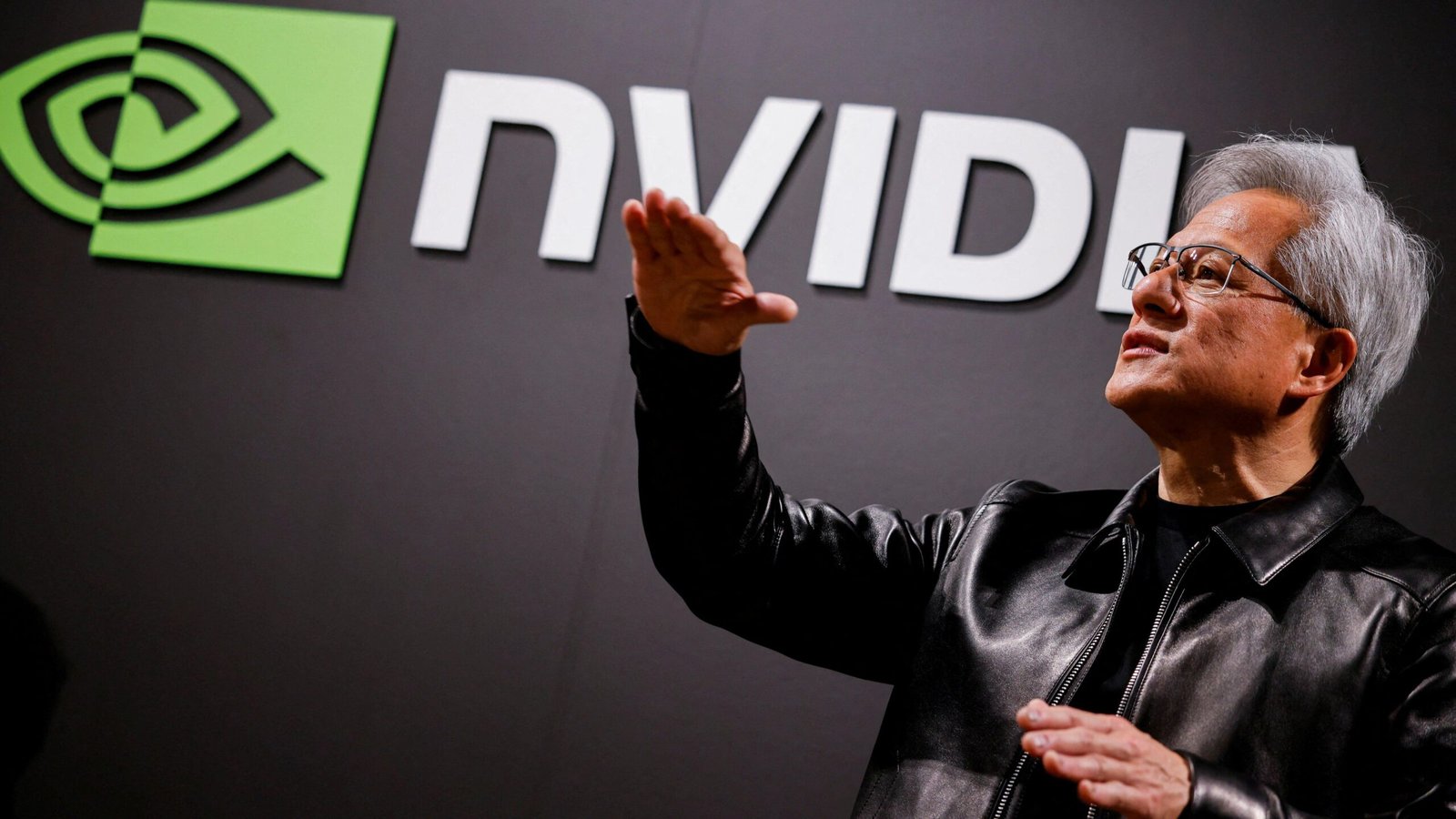
Nvidia has partnered with a coalition of Wall Street’s most powerful financial institutions to raise $500 billion for the development of global artificial intelligence infrastructure. This landmark deal marks the first time that AI hardware and “compute” capacity are being formally classified by investors as a distinct, bankable asset class.
Treating Compute as a Core Asset
The chip giant has finalized agreements with heavyweights including BlackRock, Blackstone, Apollo, Brookfield, Goldman Sachs, and KKR. According to Nvidia CEO Jensen Huang, the objective is to leverage these premier long-term capital providers to independently underwrite the massive infrastructure required to sustain the AI boom.
“In AI, compute is revenue,” Huang stated. “We are bringing the world’s leading long-term capital providers together to independently underwrite AI infrastructure.”
Scaling the “AI Factory” Ecosystem
The $500 billion infusion will be directed toward both Nvidia’s internal projects and the expansion of its broader partner ecosystem. Key focus areas include the construction of next-generation data centers—massive facilities designed to house, operate, and cool the dense arrays of GPUs required to process AI workloads—as well as the establishment of new manufacturing plants to boost chip production.
KKR co-CEOs Joe Bae and Scott Nuttall emphasized the shift in market perspective, noting, “Compute has become a critical infrastructure asset. As we’ve scaled our approach to digital infrastructure, we’ve learned that delivery, not ambition, is the hard part.”
The Global Demand for Nvidia Power
Nvidia’s graphics processing units (GPUs) currently serve as the backbone for the world’s most advanced AI systems. Tech titans such as Google, Meta, Amazon, Microsoft, SpaceX, Tesla, OpenAI, and Anthropic rely heavily on these chips to power their platforms and chatbots.
The scale of investment is unprecedented: these companies have collectively poured over $1 trillion into AI infrastructure over the past three years alone. This insatiable demand has propelled Nvidia’s market valuation to five times its size within the same period.
A New Era of Productive Infrastructure
Huang framed this development as a pivotal evolution for his company, shifting from a pure chip-maker to a foundational partner in global infrastructure. “Today, we are helping create a new class of productive, investable infrastructure: AI factories,” he explained.
Financial partners view this as a strategic long-term play. Jim Zelter, president of Apollo, noted that modern compute has emerged as a “scarce, mission-critical asset class” capable of driving significant long-term economic growth and productivity.
Industry-Wide Infrastructure Shifts
The move mirrors a growing trend of private equity entering the AI space. Recently, BlackRock secured a deal with Meta to finance and obtain a majority stake in a Texas data center. Simultaneously, Anthropic has engaged with Macquarie Asset Management and Singapore’s GIC to fund its own infrastructure needs, citing that the surging popularity of its Claude chatbot requires massive, immediate upgrades in compute capacity.