

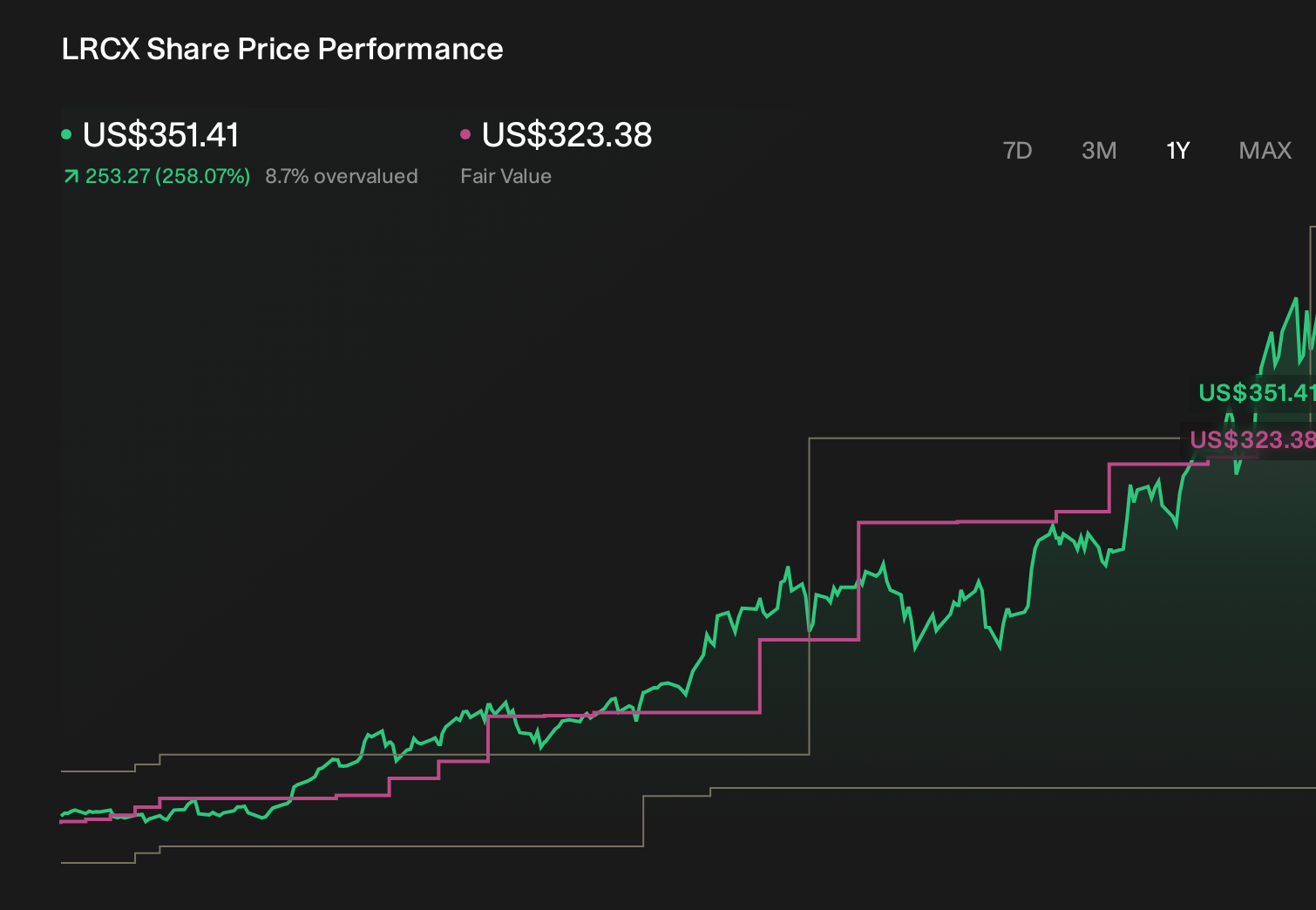
Lam Research (NASDAQ: LRCX) shares faced a sharp decline this week as investors weighed fears of cooling AI-driven demand against the company’s recent financial guidance. As a critical supplier of wafer fabrication equipment for advanced logic and memory chips, Lam Research finds itself at the epicenter of a market-wide debate regarding the sustainability of current semiconductor investment cycles.
The AI Growth Narrative Under Pressure
Lam Research plays a pivotal role in the semiconductor ecosystem, providing the essential hardware required for the production of high-performance chips that power artificial intelligence. However, the sector is currently grappling with heavy investment cycles and intensifying scrutiny over memory equipment demand. Market participants are increasingly questioning the actual capacity requirements of chipmakers, leading to a volatile shift in sentiment that suggests the initial AI-driven growth frenzy may be hitting a period of consolidation.
Market Psychology vs. Corporate Guidance
The recent sell-off in LRCX stock highlights a growing disconnect between broader market anxiety and the company’s internal projections. For investors, this creates a complex environment where weighing market psychology against company-specific signals is essential. While the macroeconomic outlook remains clouded by valuation concerns and potential supply constraints, Lam Research’s guidance serves as a critical benchmark for determining whether the current stock movement is a temporary correction or a sign of deeper structural shifts in semiconductor demand.
Evaluating Your Semiconductor Exposure
Understanding the current landscape requires a deep dive into the underlying fundamentals of the wafer fabrication equipment market. Investors must look beyond the immediate price volatility to assess how supply constraints and shifting demand for AI hardware could impact Lam Research’s long-term trajectory. Distinguishing between sector-wide trends and company-specific performance remains the most effective strategy for managing semiconductor portfolio exposure in this evolving market cycle.