

Black Hills Corporation (BKH) reported higher quarterly earnings and maintained a steady dividend this quarter, reinforcing the company’s core strategy of balancing heavy capital expenditure on utility projects with consistent shareholder returns.
Evaluating the Utility Model and Dividend Stability
To maintain a long-term position in Black Hills, investors must weigh the stability of its regulated electric and gas utility model against the risks associated with its aggressive capital projects. While the latest quarterly earnings report shows growth, it does not fundamentally alter the near-term narrative: the company remains tethered to the successful execution of infrastructure projects and the potential for cash flow pressure if data center demand or cost recovery mechanisms underperform.
The board’s decision to affirm the US$0.703 quarterly dividend serves as a critical signal of confidence. Despite the significant capital requirements for initiatives like the Ready Wyoming project and the Cheyenne data center expansion, the company has managed to keep payouts intact while simultaneously growing net income year-over-year. This provides a clearer picture for shareholders concerned about how the firm plans to fund future growth without sacrificing current income.
Capital Expenditure and Future Revenue Targets
Looking ahead, Black Hills has set ambitious financial targets, projecting $3.6 billion in revenue and $578.3 million in earnings by 2029. Achieving these figures will require a sustained 16.8% annual revenue growth rate and an earnings increase of approximately $290 million from current levels of $288.3 million.
Valuation Perspectives and Market Expectations
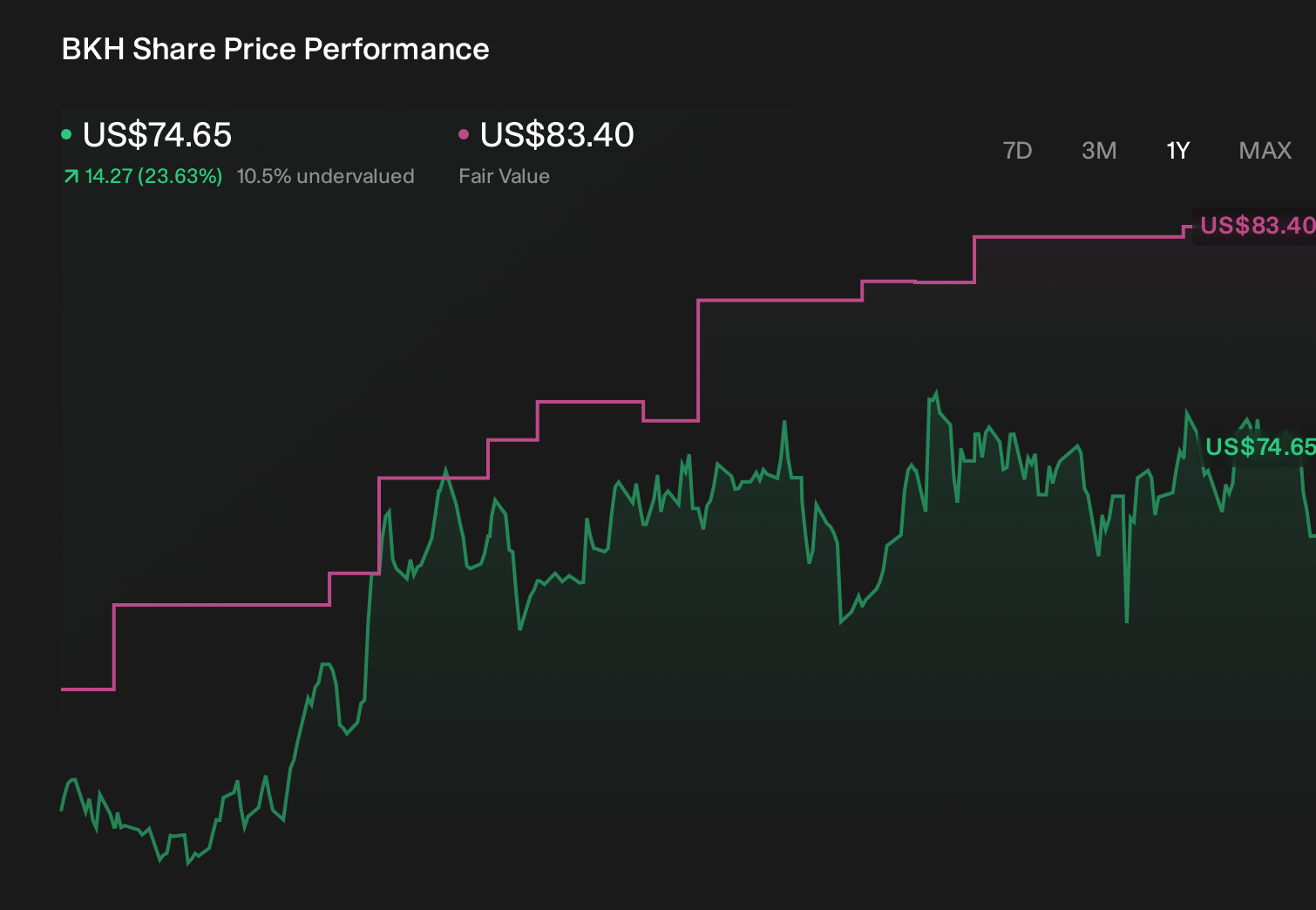
Investor sentiment regarding the stock’s intrinsic value remains varied. Simply Wall St Community members currently estimate the fair value of Black Hills to be between US$67.12 and US$83.40. Reaching the higher end of this range implies a potential 12% upside from the current market price.
However, the heavy, ongoing investment in grid modernization and power generation capacity raises valid questions regarding future cash flow resilience. Investors are encouraged to look beyond the ticker symbol and scrutinize how rising capital requirements interact with potential volatility in data center load demand, as these factors will ultimately dictate the company’s long-term earnings power.