

Gartner (IT) is aggressively repurchasing shares—retiring over 41% of its stock since 2015—to bolster earnings per share, even as the firm faces potential disruption from AI-driven research tools and tightened client spending.
The Buyback Strategy vs. Revenue Realities
To remain a compelling investment, Gartner must prove its subscription research and advisory model remains indispensable in an era of low-cost, AI-powered information. Current quarterly results and a modest 2026 revenue outlook suggest that the company’s primary focus remains on stabilizing contract value growth. However, the firm faces a critical balancing act: while heavy capital returns support EPS during periods of muted top-line growth, this strategy intensifies the scrutiny on Gartner’s pricing power and client retention in a cooling market.
Evaluating the 2029 Growth Targets
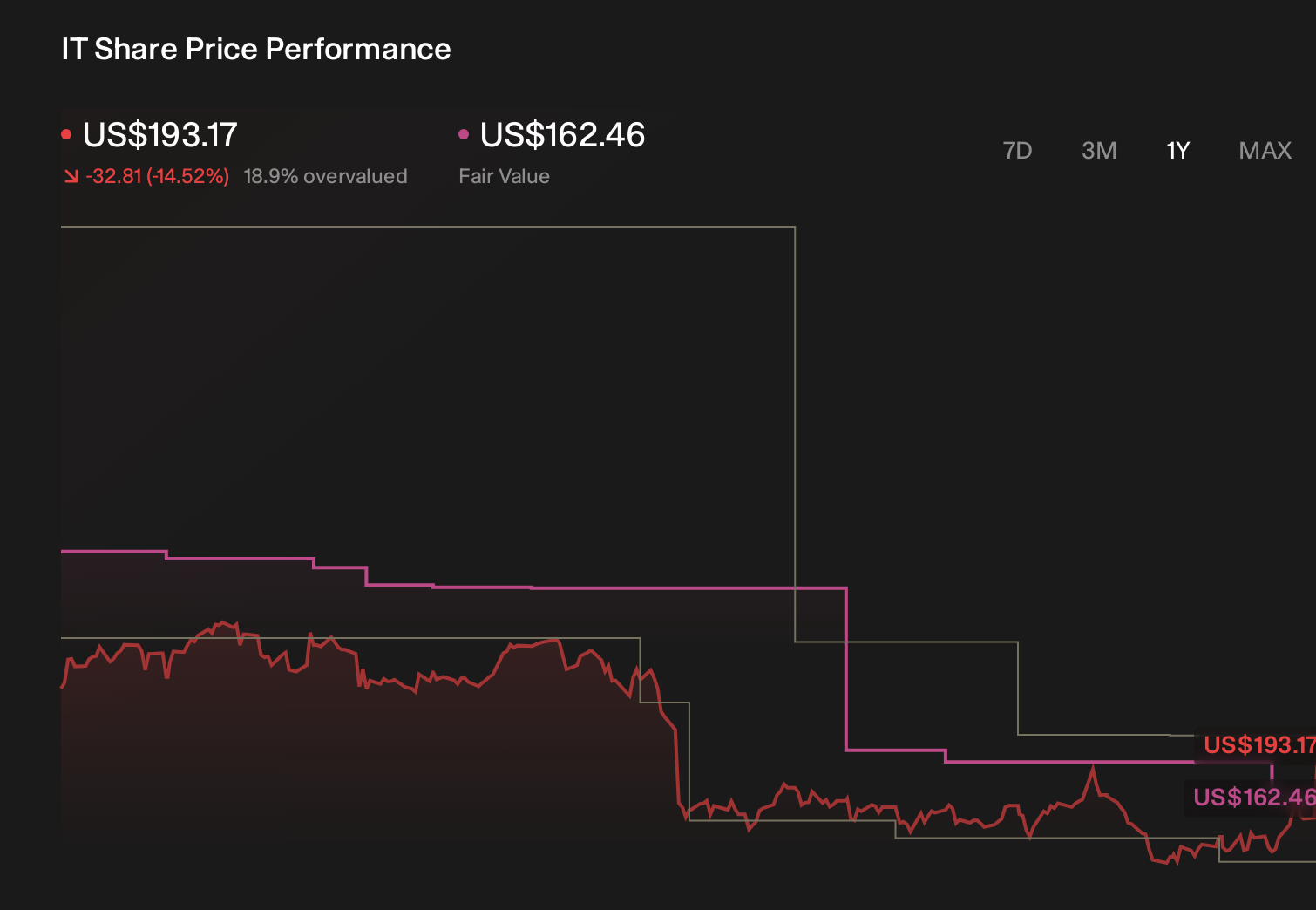
Gartner’s long-term internal projections aim for $7.1 billion in revenue and $985.7 million in earnings by 2029. Achieving these figures requires a 3.0% annual revenue growth rate and a $245.1 million increase in earnings from current levels of $740.6 million. These targets are central to the debate over the stock’s valuation, as some analysts suggest a fair value significantly lower than the current market price, implying a potential 16% downside.
AI Disruption and Analyst Skepticism
The core narrative surrounding Gartner is increasingly tied to the threat of free or low-cost AI research tools potentially eroding the company’s data edge. While some market observers maintain a more pessimistic outlook—forecasting revenue closer to $6.8 billion by 2029—the latest guidance and the company’s commitment to share buybacks force a re-evaluation of these estimates. Investors are now tasked with determining whether the firm’s capital allocation strategy is a sign of financial strength or a tactical move to mask broader challenges in maintaining its competitive moat.