

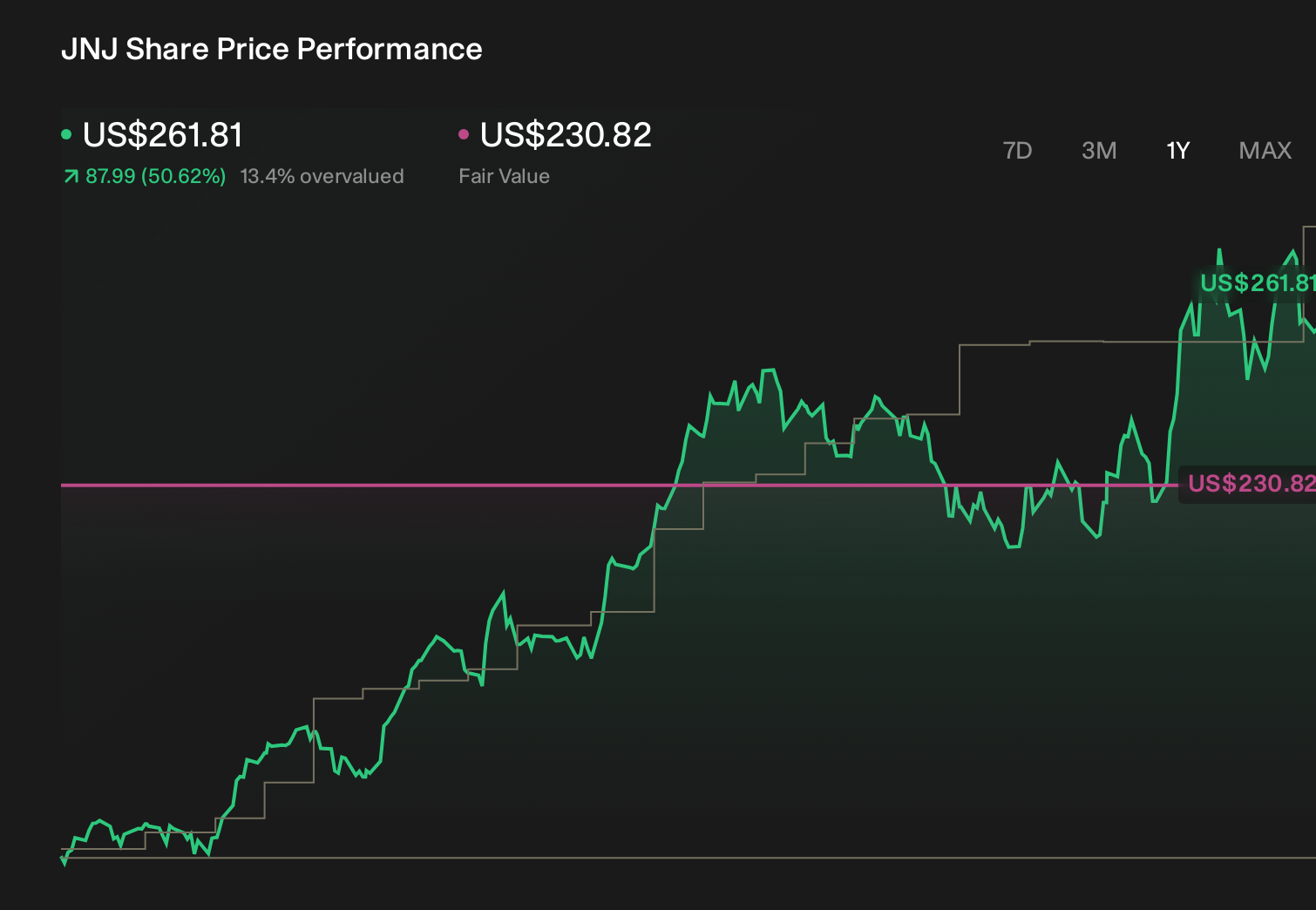
Johnson & Johnson (JNJ) is betting its future on a strategic pivot toward innovative medicines and MedTech, aiming to neutralize patent expirations and litigation headwinds through the recent FDA De Novo authorization of its OTTAVA robotic surgery system and a massive $5.50 billion talc settlement framework.
The New Era of J&J MedTech
To remain a powerhouse, Johnson & Johnson must prove that its shift into high-growth sectors can effectively offset the pressures of biosimilar competition and legal liabilities. The immediate focus for shareholders is the company’s execution in oncology and MedTech. The FDA’s recent De Novo authorization for the OTTAVA robotic surgery system is a landmark development, signaling J&J’s aggressive entry into the soft tissue robotics market. This move, bolstered by key electrophysiology partnerships, serves as a litmus test for the company’s broader innovation agenda.
Managing Litigation and Growth Targets
Beyond robotics, the looming shadow of talc litigation remains a critical factor for investors. The proposed US$5.50 billion settlement framework is a significant step toward stabilizing the company’s balance sheet and reducing the uncertainty surrounding future cash demands. Meanwhile, the company’s oncology pipeline, specifically the expansion of RYBREVANT FASPRO under Priority Review, remains a cornerstone of its growth strategy.
Financial Outlook and Analyst Perspectives
The company’s internal projections are ambitious, targeting $120.5 billion in revenue and $28.6 billion in earnings by 2029. Achieving these figures requires a consistent 7.2% annual revenue growth rate and an earnings increase of $7.6 billion from current levels. Current forecasts suggest a fair value of $270.59 for JNJ shares, representing a potential 3% upside from current pricing.
Differing Market Sentiment
Not all analysts share this optimism. Some of the more cautious market observers project lower 2029 figures, estimating revenue at approximately US$114.4 billion and earnings at US$22.6 billion. These skeptics highlight the risk that if the rollout of the OTTAVA system scales slower than anticipated, MedTech margins could suffer, creating a significant drag on the company’s overall performance compared to current consensus estimates.