

Okuma (TSE:6103) reported strong first-quarter 2026 earnings, posting sales of ¥51,903 million and net income of ¥4,984 million, a significant jump from the ¥44,646 million and ¥1,409 million recorded in the same period last year.
Market Momentum vs. Valuation
These robust results arrive amid a powerful rally for the company’s shares. Okuma has delivered a 7-day return of 12.84% and an impressive year-to-date gain of 53.30%. With a 1-year total shareholder return of 57.67%, the stock is clearly riding a wave of positive momentum that extends well beyond the latest financial disclosure.
Analyzing the P/E Ratio: Premium or Overvalued?
As Okuma trades above average analyst targets, investors are scrutinizing its valuation. The company currently trades at a price-to-earnings (P/E) ratio of 20.3x. While this sits slightly below the peer average of 20.9x—suggesting the stock is not necessarily “stretched” compared to direct competitors—it stands in stark contrast to the broader Japanese machinery industry, which averages a P/E of 13.4x.
This higher multiple implies that investors are paying a clear premium for Okuma’s earnings profile. However, if growth expectations cool or market sentiment shifts, this P/E ratio faces the risk of compressing toward an estimated “fair” level of 16.4x.
The DCF Perspective: A Narrow Margin of Safety
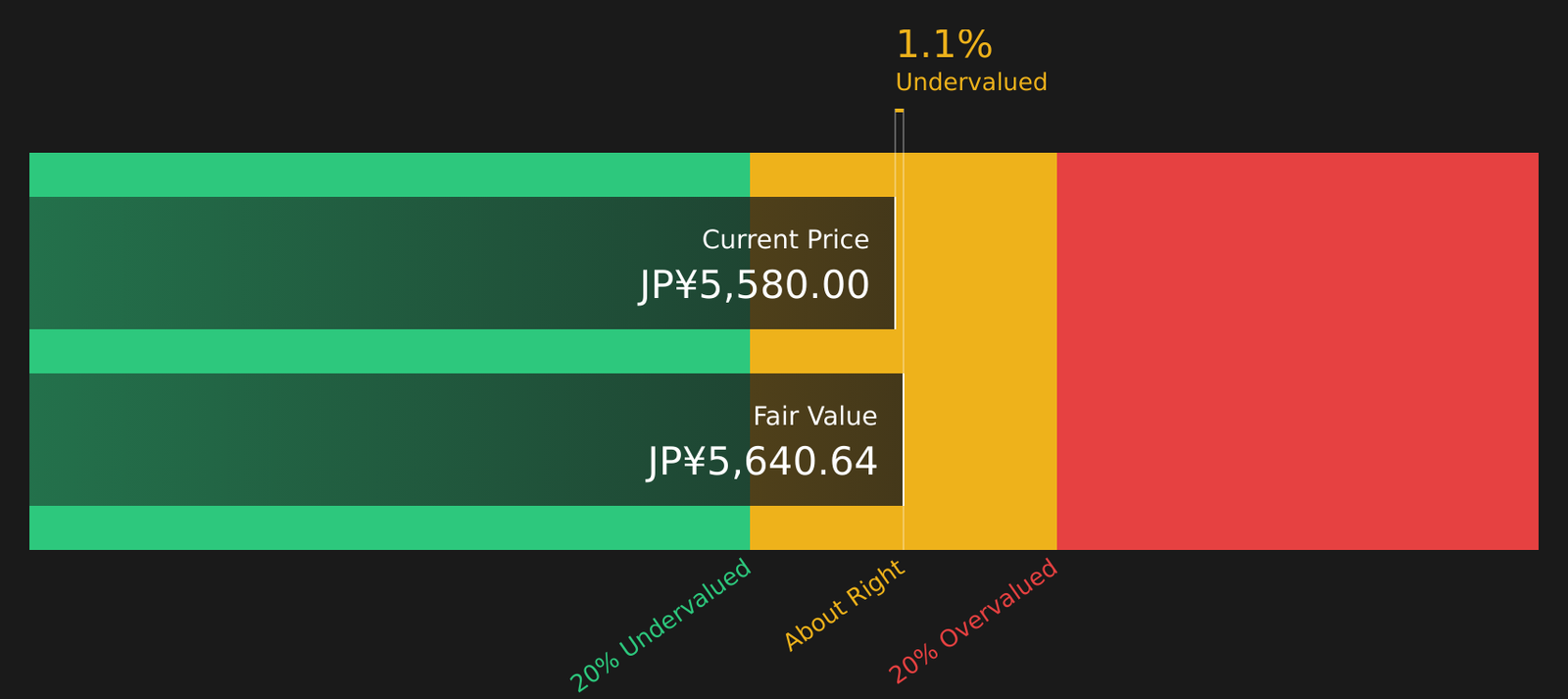
While the P/E ratio paints a picture of a premium-priced stock, the discounted cash flow (DCF) model offers a more nuanced view. Currently priced at ¥5,580, Okuma sits just below the estimated future cash flow value of ¥5,640.64.
This narrow gap between the current market price and the modelled fair value leaves little room for error. Investors are now left to weigh whether the company’s recent performance justifies this valuation or if the stock is nearing a ceiling where potential upside is limited by fundamental constraints.
Key Considerations for Investors
Okuma remains a focal point for those tracking the robotics and automation sector. With the stock drawing both enthusiasm for its earnings growth and caution regarding its current premium valuation, market participants must determine if the momentum can be sustained. Reviewing the underlying fundamental data—including identified rewards and warning signs—remains the most prudent step for those evaluating their position in this machinery leader.