

Toyota Motor (TSE:7203) is currently facing intense market scrutiny as it shifts Tacoma pickup production from Mexico to its San Antonio, Texas facility, a move expected to generate over 2,000 new U.S. jobs despite concerns that the stock may be trading 39% above its fair value.
Market Performance and Strategic Shifts
The decision to expand the San Antonio manufacturing campus marks a significant pivot in Toyota’s North American operational strategy. This development arrives amidst a volatile period for the automaker’s stock, which has seen a 5.56% increase over the last 30 days, yet remains down 12.33% year-to-date. Despite recent fluctuations, long-term investors have seen more stability, with a 1-year total shareholder return of 10.74% and a 5-year return of 72.24%.
Valuation Discrepancies: The 39% Gap
While Toyota’s operational footprint evolves, the financial narrative surrounding the stock remains contentious. With the stock recently closing at ¥2,980, market analysis suggests a fair value of approximately ¥2,137.79. This significant valuation gap has prompted investors to question whether the current market price reflects a disconnect between Toyota’s future earnings potential and its present trading levels.
Decoding the Fair Value Narrative
The valuation model for Toyota is heavily influenced by specific projections regarding battery technology breakthroughs, anticipated profit margins, and future product mix. The current assessment labels the stock as overvalued at ¥2,137.79, though this outlook faces potential headwinds. Specifically, any stagnation in the development of solid-state batteries or downward pressure on margins within the core automotive segment could undermine the current investment thesis.
P/E Ratios and Market Sentiment
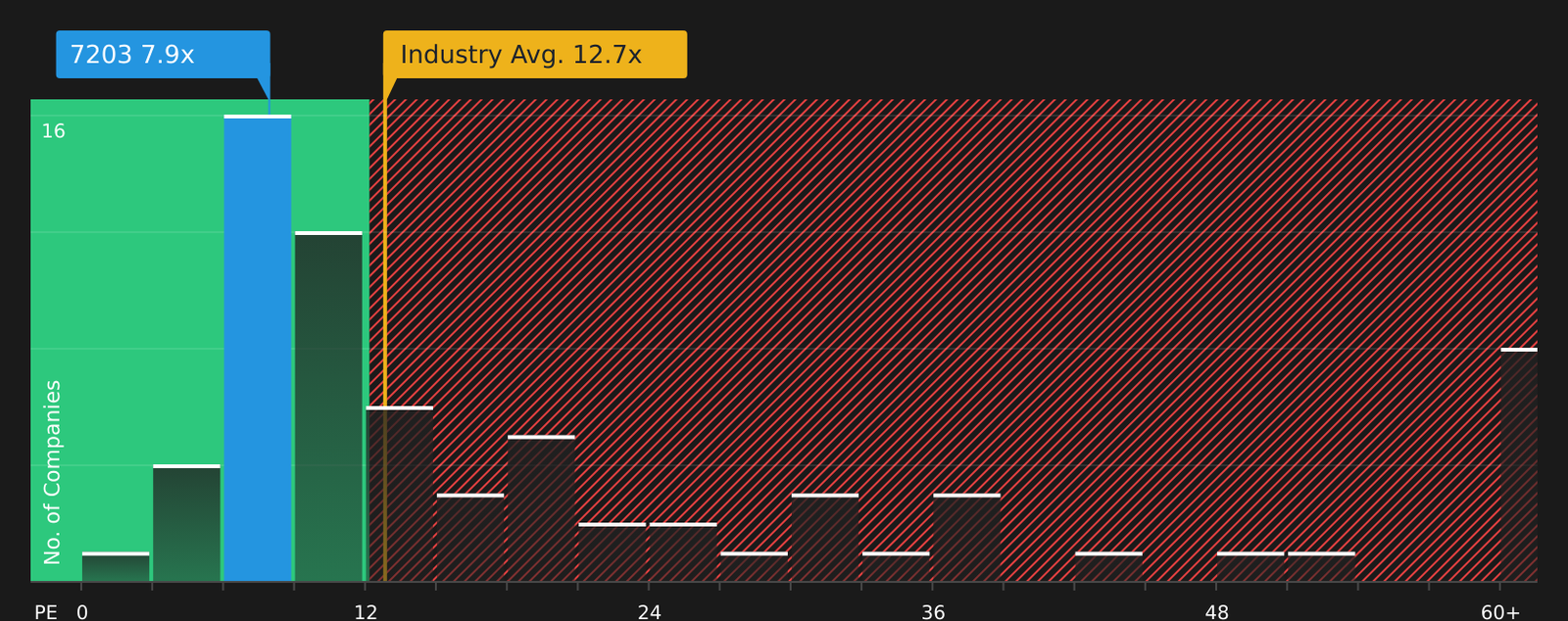
A curious contradiction exists when comparing Toyota’s valuation to broader market metrics. Toyota currently trades at a P/E ratio of 7.9x, which is notably lower than the Japanese market average of 13.8x and the Asian automotive sector average of 12.7x. This discrepancy suggests that the market may be pricing in higher levels of risk regarding Toyota’s future cash flows compared to its industry peers. For long-term investors, the core question remains: is the current P/E ratio a signal of underlying operational risks, or a temporary mispricing waiting to be corrected by the market?