

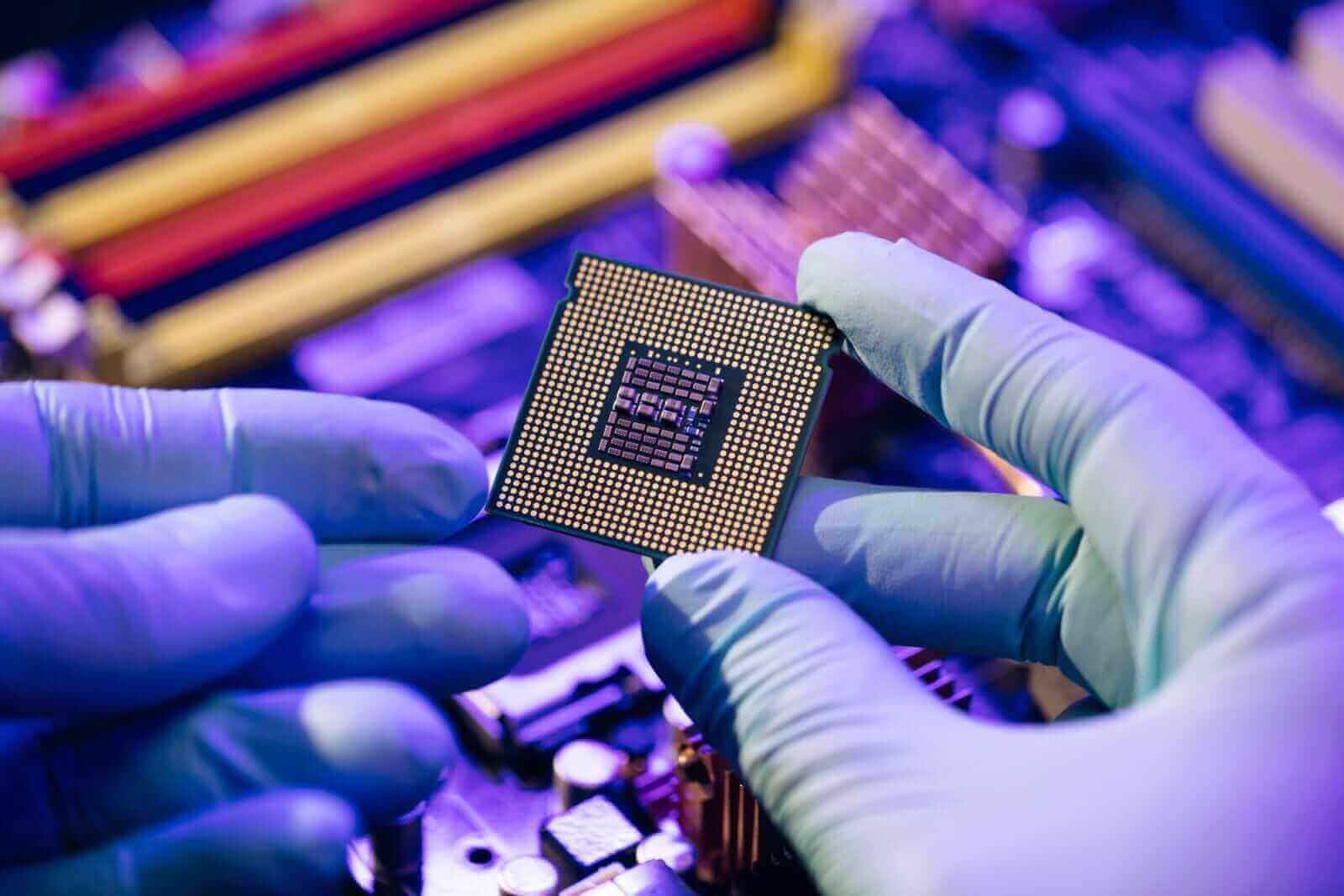
Micron Technology (MU) shares have plummeted nearly 25% since their June 25 peak, sparking intense debate over whether the selloff signals a fundamental shift or a necessary valuation reset for the AI-driven memory giant.
The AI Memory Powerhouse
Micron Technology remains a cornerstone of the modern computing era, providing essential DRAM, NAND flash, and High-Bandwidth Memory (HBM) solutions. Based in Boise, Idaho, the company is a global semiconductor leader, serving critical sectors including AI accelerators, data centers, smartphones, and automotive industries. Despite the recent volatility, Micron holds a market capitalization of approximately $1.07 trillion.
Performance vs. Recent Volatility
Even with the recent slide, MU remains one of the top-performing large-cap tech stocks, boasting a 692% gain over the past 52 weeks. While the stock currently trades roughly 21% below its all-time high of $1,255, it continues to significantly outperform the S&P 500 ($SPX).
Valuation and Market Outlook
The recent correction has made Micron’s valuation increasingly attractive. Trading at 13 times forward P/E, the stock appears reasonably priced given the sustained demand for AI-related memory. While the price-sales ratio of 28.7x remains high, investors are pivoting toward earnings-based valuation models, suggesting that the recent price drop has successfully trimmed previous excess. Additionally, the company’s $0.15 quarterly dividend serves as a modest but welcome incentive for long-term holders.
Record-Breaking Financial Results
Micron’s fiscal third-quarter 2026 results, released on June 24, underscored the company’s robust momentum. Revenue soared to $41.46 billion, a massive jump from $23.86 billion in the previous quarter and $9.30 billion in the same period last year.
Profitability metrics were equally impressive, with GAAP EPS of $24.67 and non-GAAP EPS of $25.11. A gross margin of nearly 85% highlights the favorable pricing environment for memory chips. Furthermore, operating cash flow climbed to $25.4 billion, reinforcing a strong balance sheet supported by over $30 billion in cash and investments.
Strategic Shifts and Future Growth
CEO Sanjay Mehrotra highlighted a pivotal shift in the company’s business model: the implementation of Strategic Customer Agreements (SCAs). These agreements are designed to reduce the volatility typical of the “boom-bust” memory cycle by improving demand visibility and stabilizing orders. Beyond these agreements, Micron is aggressively expanding its manufacturing capacity, particularly for HBM used in AI GPUs, positioning itself to capitalize on the multi-year expansion of AI infrastructure.
Wall Street Sentiment
Despite the recent price drop, Wall Street maintains a bullish stance on MU, with a consensus “Strong Buy” rating. Analysts emphasize that the AI memory cycle is still in its infancy. With a mean price target of $1,487.65 and high-end estimates reaching $2,000, the stock presents a potential upside of approximately 50% from its recent closing price of $991.64.