

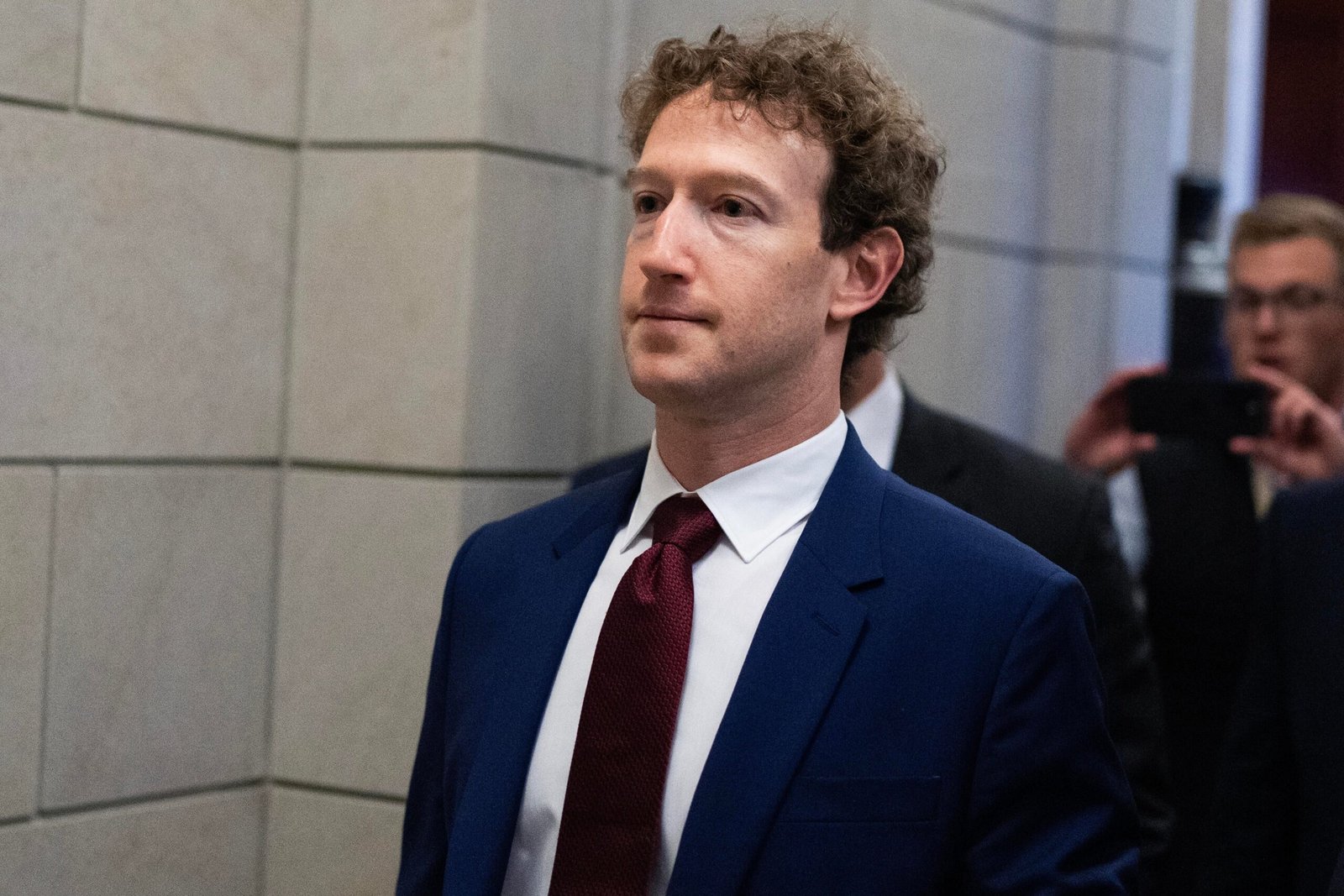
Mark Zuckerberg published a 6,500-word essay on Meta’s website this Monday, declaring that powerful artificial intelligence tools should be accessible to as many people and businesses as possible to drive global prosperity.
The Case for Superintelligence
In his comprehensive vision for the future, the Meta founder argued that “superintelligence”—AI capable of cognitive abilities far exceeding those of humans—will be a catalyst for national security, economic growth, and breakthroughs in both science and creativity.
“Humanity has witnessed many transformative advances. Each time there is fear that people will be left behind,” Zuckerberg wrote. “But each time humanity has come out with more people sharing greater prosperity, health and freedom. We believe this will be true with AI as well, and the abundance of the future can be shared by everyone.”
1. The Rise of Personal AI Agents
Zuckerberg envisions a future where every individual is equipped with a personal AI agent. These tools are designed to serve as assistants for daily needs, ranging from health management and career guidance to personal finance and relationship support.
2. Democratizing Access and Privacy
To accelerate adoption, the tech billionaire announced that Meta will provide free versions of its tools to “billions of people,” aiming to keep access costs as low as possible. Crucially, he committed to developing a “fully private mode” for these agents, ensuring that neither Meta nor other providers can access or view sensitive user information.
3. Redefining the Future of Work
Addressing widespread fears of job displacement, Zuckerberg characterized superintelligence as a “tool of invention” rather than mere automation. He predicted that the technology will foster the creation of entirely new job categories that do not exist today.
“Company sizes may shrink — just as they did in the transition from industrial giants to tech companies,” Zuckerberg noted. “But this doesn’t mean fewer jobs overall. It implies a larger number of companies with fewer people each.”
4. Investing in Data Center Communities
As Meta races against hyperscalers like Alphabet, Amazon, and Microsoft to build massive data centers, the company faces growing public pushback regarding environmental and economic impacts. To mitigate this, Zuckerberg announced the “$1 billion ‘Future is for Everyone Fund'” to support local communities hosting these facilities.
He further pledged to keep electricity costs low, restore local water supplies, and implement workforce training programs. Meta’s 2026 capital expenditure budget of $145 billion will be directed primarily toward these data center expansions.
5. The Open Source Strategy and Safety
Zuckerberg emphasized the need to lower barriers for U.S. open-source AI models to ensure they remain competitive against foreign entities. He argued that keeping models under “lock and key” is more dangerous than open access. Consequently, Meta plans to resume releasing open-source models soon, including “Muse Glimmer” and an open-weight version of its advanced coding model, “Muse Spark 1.2.”
To ensure safety, he proposed that AI labs share “intermediate training checkpoints” with the government to address security risks early. Additionally, he urged tech companies to collaborate closely with law enforcement to proactively prevent bad actors from weaponizing AI technology.